Sticks and Bones is a brutal play. Written by David Rabe at the end of the 1960s, it tells the story of David, a recently returned, blinded Vietnam War Veteran, and his family, named after the all-American 1970s television characters Ozzie and Harriet Nelson.
Source: Bill Pullman’s 70s Show – Interview Magazine
Bill Pullman’s 70s Show
By Emma Brown
November 6, 2014

ABOVE: BILL PULLMAN IN STICKS AND BONES. PHOTO COURTESY OF MONIQUE CARBONI.
Sticks and Bones is a brutal play. Written by David Rabe at the end of the 1960s, it tells the story of David, a recently returned, blinded Vietnam War Veteran, and his family, named after the all-American 1970s television characters Ozzie and Harriet Nelson. On the cover of the playbill is a razor blade decorated with an American flag. One character, a young Vietnamese woman named Zung, silently stalks about the Nelson’s house and interacts only with David. Another, David’s younger brother Rick, blithely beelines past his crumbling parents in search of a piece of fudge and some pop before escaping to his friends.
But it is the dialogue that truly cuts. There are no throwaway lines in Rabe’s writing; everything is significant, whether it is David standing over his sleeping father violently telling him him, “I hate you,” or Ozzie announcing to no one in particular that he once “out-ran a bowling ball.”
In the New Group’s revival of Sticks and Bones, which officially opens tonight, Bill Pullman and Holly Hunter star as Ozzie and Harriet, with The Book Thief’s Ben Schnetzer as David, Raviv Ullman as Rick, and Richard Chamberlain as the family’s priest. Scott Elliott serves as the director. The play has not been performed in New York since 1972, when it won the Tony Award for Best Play.
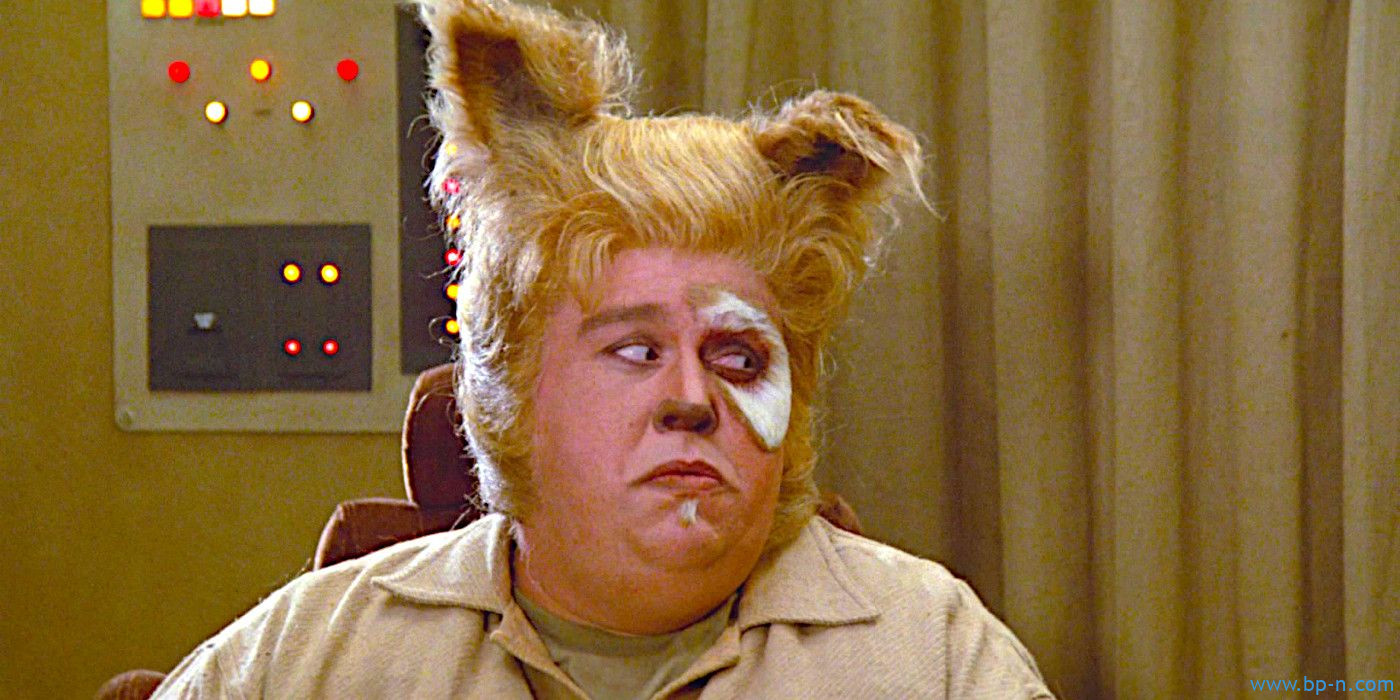
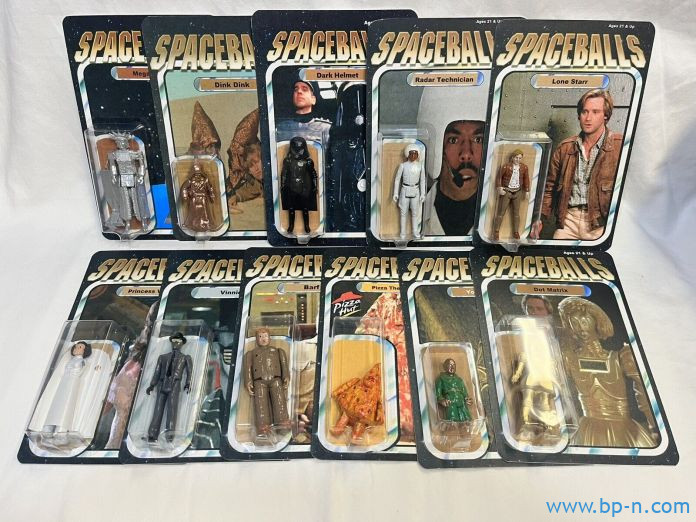
We recently spoke with Pullman, who began working in theater in the 1980s and has since appeared in over 50 films including Spaceballs (1987), Singles (1992), Sleepless in Seattle (1993), Independence Day (1996), Igby Goes Down (2002), and The Equalizer (2014).
EMMA BROWN: The monologues in the play are so well written. Do you have to be very meticulous in your delivery?
BILL PULLMAN: Oh, yeah. David [Rabe]’s really specific. He’s channeled the piece, I think, in some way. There’s something about it. The language of each character is different from each of the others. Ozzie’s got certain idiomatic things that I have to pay great attention to—most of them are incorrect grammar that you’re just so programmed [not to say]. That line, “All this feelings of a child in me”—the correct [phrasing] is all these feelings. Those kinds of things add a lot to the character so you want to get ’em right. I had to keep working. It’s like a cello piece or something, everyone’s so geared to try and keep the flow of it going and alive.
BROWN: I heard that David was around a lot in the beginning.
PULLMAN: Yes, all the way through. He has very good theatrical sense. It’s been really interesting seeing him grapple with a play written 40-plus years ago—what he feels comfortable changing, what he wants to change, and what he changes back. He has a kind of dialogue with himself about the young David and the old David, and sometimes he prefers the young David.
BROWN: What’s an example of something he changed and then changed back?
PULLMAN: He had some language that he thought was archaic or wrong. When Harriet first comes down the steps and discovers that [her son] is blind, I say, “Look at him, he looks so old, but it’s nothing, Harriet, I’m sure.” And he worried about, “What’s that, ‘old’ ?” So he tried “different”—”Look at him, he looks so different, but it’s nothing, Harriet, I’m sure.” But “different” isn’t the same. It’s not as good, and “old” is kind of weird. So he went back to the young David on that one. Lines like, “I clamber over mountains,” he’d say, “Just say ‘I’m going over mountains.’” But then I’d miss clamber. It’s a word that comes out of the past. He’s really listening to all those nuances in the words and expressions; you know it means a lot to him to get the words right, though he doesn’t talk about it. He doesn’t harp on it. He’s not one of those people where it’s connected to their ego, he’s just worried about precision of emotion and calibration of the story.
BROWN: A lot of the things the character David is going through seem like they could apply to a soldier today—a veteran of Iraq or Afghanistan. Do you know if David considered updating the play from the Vietnam War to Iraq?
PULLMAN: I don’t know if he’s ever thought about that, but probably not. Just because, as he said, “There’s part of me still in Vietnam” and there’s no part of him in Iraq. For him, the issue’s coming back—it’s not really a play specifically about Vietnam vets coming back. In a lot of ways it’s about a family that’s had trauma in the past getting inflicted with this new trauma, and how does everybody deal with it.
BROWN: When you get a role like this, what’s the first thing you do?
PULLMAN: I avoid reading the play—no. [laughs] That’s my bad habits. I read it and wanted to do it. I knew I wanted to start working on the lines before we started rehearsal ’cause there’s a lot there and it’s really complicated. I was working on a movie in Oregon and I had a production assistant help me and just read cold book. I think I did it for about 11 days before I came here. That was good. It takes a lot longer to learn lines that way than once you’re up there and you have a physical life, but I have always been pretty comfortable working on it without pre-determining things that would be precious to me. I was interested in seeing what the room provided with Holly and the other actors there, with Scott there and with David there. My body is more informative than my brain sometimes, just in terms of when I’m feeling like I’m not just in the intellectual life in the play, but in the physical life of the play. Once you start to feel that, you have little inclinations of something happening and try to protect it and nurture it and see if it is going somewhere. Those kinds of things are all happening in the rehearsal room. It was a really good, wonderful exploration. It was the funnest time, talking about it, trying it out, 180 degree difference. I think back at some of the scenes we did—”Let’s try it with this attack.” Then, “Well, that was too much.” Scott’s been a very good director to invite us all to deal with denial. Have you ever been around anybody with deep denial about things?
BROWN: Yes, but can you elaborate?
PULLMAN: Well, we’re all in denial. We all don’t really know we’re going to die. I’m not saying that these are freaks of nature, but the ways of compensating for trauma that’s happening—live conflict—everybody has different responses. One of them is to pretend that it doesn’t exist or to go to the safe things. This family has a way—probably a lot of families do—about going for food: “Oh, everybody’s a little tense. Let’s have something to eat. You’ll feel better.” I was just on the phone with a very good friend who’s an alcoholic, who will not say he’s an alcoholic. Addicts—that’s the most common, I guess. But these people, David sees the humor. A lot of the humor comes from that. You can get kind of derailed when you’re looking at a play like this and the psychology, the subtext, the trauma that’s beneath it. You start playing that and then you’re not in sync with the music of the play. If you’re in denial, you’re chipper about something depressing—that’s more in sync with the play.
BROWN: I laughed a lot, but often I felt guilty about it because you know it’s not really funny. Ozzie
has that speech when he realizes his son had a relationship with a Vietnamese woman, and the way he delivers it, he just keeps finding different ways of phrasing it and some of them are so weird like, “You pronged her.” He’s so awkward about it and it’s sort of hilarious, but also totally horrific.
PULLMAN: [laughs] “You put in your prick and pumped ass. You screwed some yellow fucking whore.”—It’s horrible!
BROWN: Yeah, it’s horrible. I can’t even imagine reading that on the page. When you first looked at it, were you like, “How am I going to deliver these things?”
PULLMAN: Yeah, well I think about all of that nature of what deep racism is. Things have changed so much in 42 years, but I remember growing up with guys like Ozzie. I had a godfather who was very much like that. He’d sit in front of his VW—he had a van, a hunting fishing van, but it was German made. I don’t know how he got around that in his head because he was a WWII vet and hated Germans and Japanese. I’d be sitting there and he’d go, “Look at that son of a bitch with his long hair. Why are they so dirty?” You’re caught with somebody who wants you to agree with them. I remember thinking, “I don’t really like that, but I don’t know how—” Those people had the day in a lot of ways. The whole “generation gap” was a term that was common then. But I think that racism reminded me of that generation gap: Hang out in the VFW, drink beer. That whole thing about “I’ve been hit by an egg”—something to get mad about. Something to drink beer over. There are so many facets to this play—really specific things. I can’t think of any other play that does quite the same thing. When I started, I remember telling people, “Oh this is like an O’Neill play.” Really, only in a little way because it’s a family drama and it’s the trauma of getting them all to speak weird and bizarre truths. It’s not a satire. Satire you laugh only to your Adam’s apple and this has painful laughs that go deep.
BROWN: Do you think a play gets better at the end of the run?
PULLMAN: Hopefully. Wouldn’t it be terrible if it didn’t? [laughs] It would be awful. I think good, well-written plays always get better. There are times when it gets derailed. There will be a way where the audience takes it away from the production—they want certain things. I don’t think that’ll happen so much. Other plays I’ve been in where I feel like the actors smell the humor and start only playing the humor, then it gets away from them a bit.
BROWN: How’s the audience been so far?
PULLMAN: Very different. They’re all compelled. I’d say more so than I thought. I didn’t realize how much of the play you would spend where you could hear a pin drop. In terms of the humor, I think there’s some that are really ready to go and have no problem laughing. You never know whether somebody delivered a key line that cracks them open a little soft.
BROWN: Do you remember what was the first time you were on stage?
PULLMAN: First time I was ever on the stage—sixth grade I guess. It was a Christmas play.
BROWN: Who were you?
PULLMAN: A shoemaker. I had the lead. I had another one in high school where I was the lead, but in those days I never thought about going into theater. I was from a rural school. No one was saying, “Oh, I want major in this.” You were in plays. You had fun. I didn’t do a lot of plays but I did those two. Then I went to a vocational college for building construction. I tried out for a play, got cast, and then the guy that was directing said, “You oughta look into this.” He will come down and see this play. I still keep in touch with him. He’s great sensibility and I’m really glad I had him at that point in my life.
BROWN: When you were in high school, did you think you’d end up going to Vietnam?
PULLMAN: Yeah. I had older brothers and sisters and they were very politically involved. My one brother dropped out of Wesleyan College in his last semester so he could go door-to-door and protesting the mining of Haiphong Harbor (May 1972). That impacted our family quite a bit. I think this issue about what happens to the psyche in war has been interesting. I just did a thing called Healing Wars that premiered at Arena Theater, it’s a devised piece that we did in June. That really was interesting prep for this play, encounters with vets and caregivers for them. They’re using fMRI—functioning MRIs—that analyze the brain of people who’ve had trauma and I underwent it.
BROWN: Oh really?
PULLMAN: Yeah. It was interesting to feel what it was like being a lab rat, in a way, for brain function. Part of me had worried that they’d see a huge black hole. [laughs]
BROWN: How does it work? They ask you questions?
PULLMAN: You’re inside and you’re lying down. You have a little clicker and there’s a little screen you can look at and, in that particular trial, they asked you to engage in competitive things that involve trust and the other one was involving money—playing against someone you could develop a relationship with. They pre-determined a signal of low trust and inability to rely on cooperation and things like that. There was a woman who did this presentation—I was the only one who volunteered from this group of people that were involved with this production. She said, “Well, this shows you are a pretty nice person but not all the time.” [laughs]
BROWN: How did you get your Actor’s Equity Card?
PULLMAN: It was terrible. I was doing this children’s theater play and it was non-Equity. We were out of town to do it at the Kennedy Center and it was always kind of, “Well, the producers may have to turn this into Equity” and that’s what happened. It was kind of a silly children’s theater play but that’s how I got my card.
BROWN: Was that like, “Okay I’m an actor” or did you already feel like one?
PULLMAN: I always felt like one, I guess. It meant I had to come up with some money but it also meant I would have a little bit of a network. At that stage, you’re just looking to get some purchase on the slippery slope of trying to crawl out of the great mass of people that were all in the same boat. I never had any idea of going into movies. I spent most of those years thinking, “Wouldn’t it be great to do it on Broadway.” Then I got diverted and I didn’t do a play on Broadway until 2002. It feels weird that I took so long—well, maybe not. I’m fascinated by movies and enjoy that, of course, but always the measure of how you are functioning in the arts was theater.
BROWN: Did you watch a lot of movies growing up?
PULLMAN: Not so much. I watched John Wayne movies, matinees—things like that. It was only in college that I saw European films. That became more of what I was interested in.
BROWN: Have you ever been sent a script with a note that said “We want someone like Bill Pullman” ?
PULLMAN: [laughs] One guy [told me], “They cast me because they said they were looking for a Bill Pullman” and he ended up living next to me, which was kind of odd. I wished he had never told me. I wish he had kept it to himself. There’s so many unfortunate things that get said that shouldn’t be repeated.
BROWN: Getting compared to other people in the arts is interesting because I feel like it can go two ways—either it’s a great compliment, or it’s an insult because your work is “derivative.” And it’s more acceptable in some art forms than in others – like in fashion, people are always referencing other things, but in visual art you don’t really want to be compared to a great painter of the past.
PULLMAN: I remember Peter Boyle, a great actor—he really did a lot of interesting work. I worked with him a couple times and he had a theory—and he was a little bit of a Buddhist—that every actor, you could trace their lineage, their type through previous generations. He was really good at it: “That guy is a John Cliff type.” He’d come up with these guys that were working in the ’30s and ’40s. I always thought that was interesting.
BROWN: What was your lineage?
PULLMAN: I think he said Joel McCrea at one point. There was somebody else that I can’t remember. But I remember Joel McCrea in certain roles and things, which I thought was interesting. There was an agent in New York when I was starting in the ’80s who would tell every person that he had a meeting with that they should think about what actor they admire and emulate them.
BROWN: That’s a strange thing to do.
PULLMAN: Yeah. I don’t know if I agree with that entirely, but maybe he was looking to take people who didn’t have a great idea of how to present what their uniqueness was. Maybe it helped.
BROWN: When you were starting out, did you ever exaggerate or lie to get a job?
PULLMAN: That I’m willing to confess right now? I don’t think so. I don’t think I ever did, but maybe I’m in denial. Maybe I did and I completely compartmentalized it. That is the thing about acting; I think you have to be a pretty good compartmentalizer. I had a little bit of a fit yesterday. A British woman came to see the play, and it’s somebody that had been aware of the fact that I was working really hard, and it was, emotionally, a little [in] turmoil, especially in the rehearsal process. When you’re in the play, it’s a different kind of process, but when you’re sitting in something and you’re trying to find and connect and emotionally enter it… it was bothering me. She saw the play and sent a note that said, “Really, you should be more like British actors. British actors don’t really identify with the character. They don’t get bogged down with all the issues of the character.” I remember thinking, “I doubt that, for one thing.” But your question was about whether I had lied. I compartmentalize, so maybe I have lied and haven’t opened the door to that room.
BROWN: Do you ever worry about having this quality—that being so good at compartmentalizing will cross over into your personal life? Or is it a good skill to have in general?
PULLMAN: Well, I just had that. I had a little fit. I’m having little fits occasionally, about non-essential issues that I’m not necessarily worked up over and I’m wondering what the hell is going on. I just had that about tickets for the opening and I just felt like it was a little Ozzie thing, the alpha side of Ozzie.
BROWN: Whenever I read a book, especially if it’s a good one, I find myself thinking in the language of the book and narrating my actions in the language of the book. Do you ever find that exact lines of Ozzie pop up in your everyday conversation?
PULLMAN: I’ve been doing it all the time. [laughs] After the show last night, I stood there and said three of them and I thought, “How boring must I sound? I’m just using lines from the play.” But in some ways, it’s at a stage where you’re going lateral. You have a line and suddenly you’re seeing all these different ways where it’s amplified in the world. One was nearer to the end—”I had memories of a darker time and we were harder, nearer to the air, and we thought of nothing as a gift”—I was using that this morning with somebody who was talking about how they were watching a reality show called Dirty, Filthy Rich—or something like that. Godawful Rich. It’s all these people that have hideous amounts of money and how they spend it. There’s something a little disorienting to me that I’m living in this culture that has those shows going on and people are watching the. I think in some ways maybe I’m like that part of Ozzie—I think of not having things as the real value. And then the frustration that he can’t share that. I’m sure your parents said, “We had to struggle so much.”
BROWN: Yes.
PULLMAN: [laughs] “We lived on a dollar a day, how come you can’t?”
BROWN: I was talking to a director and he said he thought there was a new generational gap between children today, who have always had the internet in their lives, and their parents, and he thought it was going to be as detrimental to the parent-child relationship as in the 1950s when you had the teenagers emerging and parents who’d been through WWII and didn’t really know how to relate to their children. Do you feel like there’s any truth in that?
PULLMAN: We had a little discussion during the course of this play that was a little bit about that. Scott was talking about how difficult is for young actors to get in touch with hate. I started to think about it, and I think it is something that my kids don’t have the same connection to that I did. He was talking about Ben and Raviv, who are great actors and great people—really good people—but they were parented in an environment where everything was prevented so you weren’t sitting in hate. I think with my own kids, you wonder what if that muscle that pushes you out into the world a little more aggressively comes from darker places? That’s a generalization, but anxiety is so huge now for the younger generation.